Last updated: August 11, 2026
FTC disclosure: This article contains no paid placements or affiliate relationships. Product mentions are for informational comparison only.
## Quick Answer
Most dialysis patients do best with a whey protein isolate delivering roughly 25 g of protein and under 200 mg of phosphorus per serving — that’s the practical daily default. Dairy a problem? A pea-rice blend without phosphate additives hits the same target. Either way, your renal dietitian has to confirm the product fits your lab picture before you open the container.
## Key Facts
– Hemodialysis patients typically require 1.2–1.4 g of protein per kilogram of body weight per day — roughly 50–100% more than healthy adults.
– Inorganic phosphate additives (ingredients ending in “-phosphate”) are absorbed at up to 90%, versus 40–60% for naturally occurring phosphorus in animal proteins.
– Whey protein isolate typically contains 25 g protein and less phosphorus per serving than whey concentrate, which retains more naturally occurring minerals.
– Pea protein is low in methionine; rice protein is low in lysine. Combined in a 70/30 or 60/40 blend, the two approximate a complete amino acid profile.
– Renal-specific protein supplements from suppliers such as Nestlé Health Science or Abbott Nutrition are formulated to keep phosphorus under 150 mg and potassium under 200 mg per serving.
– Soy protein is generally less suitable for dialysis patients than pea or rice because it is higher in both potassium and phosphorus.
– Ingredient lists on protein powders change without notice — re-read the label every time you reorder.
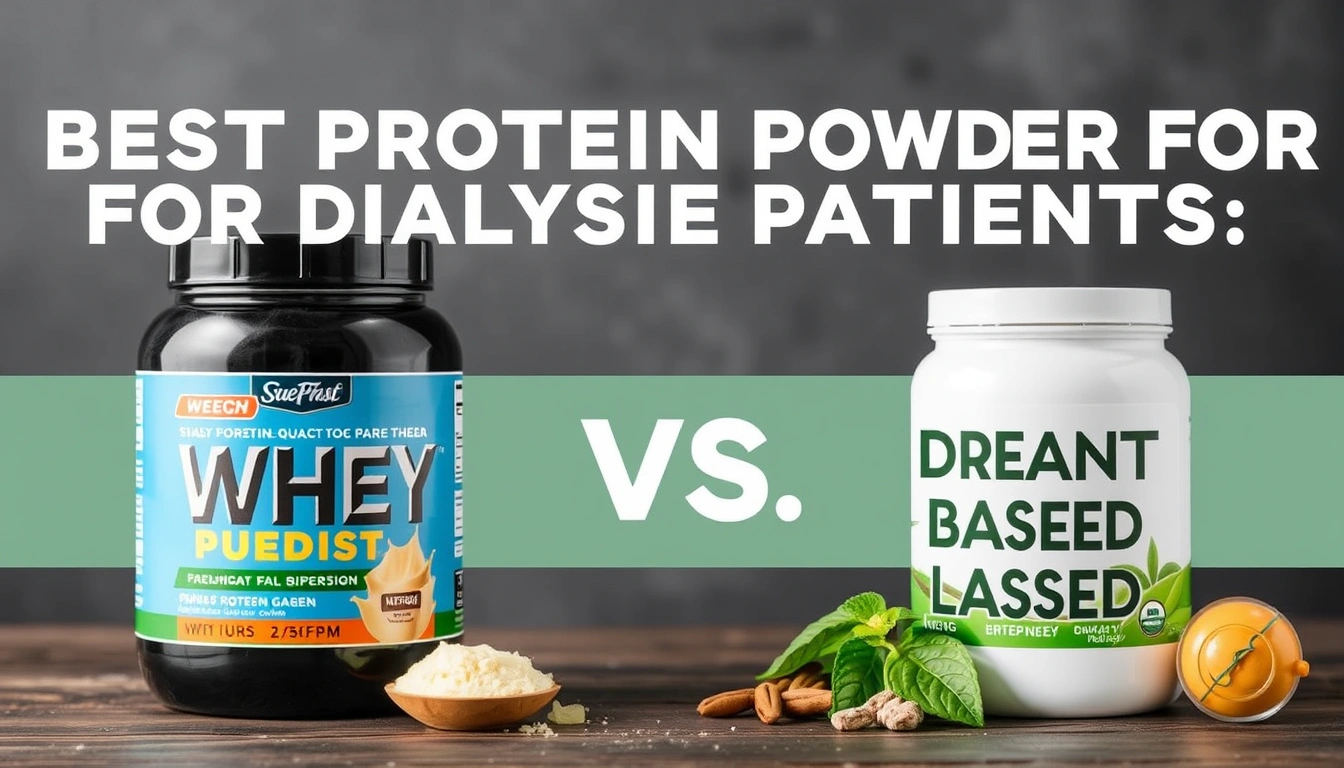
VERDICT: For most dialysis patients, a low-phosphorus whey protein isolate is the more practical daily choice — but a carefully selected pea or rice blend can work just as well for anyone who cannot tolerate dairy or prefers to avoid animal products. Your dietitian’s lab review, not any article, decides which is right for you.
Most protein-powder articles are written for healthy adults chasing muscle. Nobody told the dialysis patient reading them that the advice was never meant for their body. That gap causes real harm.
Here’s why it matters so much: dialysis patients carry tightly managed restrictions on potassium, phosphorus, and sometimes fluid. No supplement decision is safe to make without a renal dietitian checking your current numbers first. What follows is the general clinical picture; your individual labs may change everything.
Why Protein Needs Are Different on Dialysis
Dialysis clears waste from the blood, but amino acids go with it — which is why hemodialysis patients typically need 1.2–1.4 g of protein per kilogram of body weight daily, roughly 50–100% above the standard intake recommended for healthy adults. Body weight, dialysis type, and individual clinical status all shift the exact target, but the elevation itself is consistent across major guidelines from organisations such as the National Kidney Foundation. That math doesn’t change much regardless of which protein source a patient uses.
Here’s the problem: protein-rich foods tend to be phosphorus-rich foods. Phosphorus that accumulates when kidneys fail can drive bone disease, cardiovascular calcification, and other serious complications. A supplement that corrects a protein deficit while driving phosphorus to dangerous levels isn’t solving anything.
More protein needed. Less phosphorus tolerated. That tension sits at the center of every protein-powder decision a dialysis patient faces. Neither whey nor plant-based options are automatically safe.
Quick Comparison: Whey vs Plant-Based Protein Powders for Dialysis Patients

| Factor | Whey Protein Isolate | Plant-Based (Pea/Rice Blend) |
|---|---|---|
| Protein per serving (typical) | ~25 g | ~20–25 g |
| Phosphorus content | Lower than concentrate; isolate preferred | Variable; can be high |
| Phosphorus type | Naturally occurring (40–60% absorption rate) | May include phosphate additives (up to 90% absorption) |
| Potassium | Generally low | Varies by plant source |
| Complete amino acid profile | Yes | Requires blended sources (pea + rice) |
| Digestibility | High | Moderate; rice adds fiber |
| Common additives to avoid | Artificial sweeteners (check individually) | Phosphate-based emulsifiers, high-potassium blends |
| Dairy intolerance | Not suitable | Suitable |
Row three — phosphorus type — is what most comparison pieces skip, and it matters more than the total milligram figure. Phosphorus bound to organic compounds in animal proteins is absorbed at roughly 40–60%, according to nephrology dietetic resources. Added inorganic phosphate salts, which show up in processed foods and some protein powders, carry an absorption rate as high as 90%. A flavoured plant-based powder loaded with phosphate emulsifiers can therefore deliver more bioavailable phosphorus than a plain whey isolate, even when the label numbers look similar. Don’t let the label fool you.
Whey Protein Isolate for Dialysis Patients: Strengths and Real Drawbacks
Among protein options studied in renal nutrition, whey isolate has the deepest clinical record — which explains why renal dietitians tend to reach for it first when whey is on the table at all. The isolation process strips out much of the lactose and some of the mineral content present in concentrate, producing a more controlled phosphorus load per serving.
Complete. That’s how to describe its amino acid profile, including the branched-chain amino acids particularly relevant for dialysis patients trying to hold onto muscle mass. The phosphorus it contains is organic, absorbed at the lower 40–60% rate. Unflavoured or lightly flavoured without phosphate additives, the load per 25 g serving runs predictably under 200 mg in well-formulated products.
Whey is dairy, though. Patients with lactose intolerance or milk allergies simply can’t use it comfortably. Certain whey products also include artificial sweeteners like sucralose or acesulfame-K; their long-term effects in people with compromised kidney function aren’t well established. Minimal additive lists are preferable, not because additives are proven harmful, but because there’s no reason to introduce fresh variables into an already complicated clinical picture.
One label distinction most people miss: “whey protein concentrate” retains meaningfully higher phosphorus and lactose per gram of protein than isolate. The word “whey” on a tub does not mean isolate — confirm the specific form before you buy.
Plant-Based Protein Powders for Dialysis Patients: Pea and Rice as the Best Options
Dairy intolerance or a plant-based diet? A pea-rice combination is generally the most workable route. Pea protein sits relatively low in both potassium and phosphorus compared to other legume proteins, and it sidesteps the common allergen concerns that come with dairy and soy. Rice protein fills the gaps — pea runs short on methionine, rice runs short on lysine — and blended 70/30 or 60/40, the two together approximate a complete profile close to whey’s.
Certain formulations are designed specifically for renal patients, tested to keep phosphorus under 150 mg and potassium under 200 mg per serving. Twenty to 25 g of protein per serving, no dairy concern. That’s a real option for patients with confirmed intolerance.
Still, “plant-based” is not a safety signal by itself. Soy protein carries more potassium and phosphorus than pea or rice; it’s generally the wrong pick for dialysis patients. Hemp protein runs high in potassium. Many flavoured plant-based powders contain phosphate-based emulsifiers or thickeners that push inorganic phosphorus — with that near-90% absorption ceiling — into an otherwise reasonable product. A powder can market itself as natural while delivering more bioavailable phosphorus than a plain whey isolate. Read every ingredient line.
Digestibility is also lower on average for plant proteins than for whey; since dialysis patients already absorb nutrients less efficiently than the general population, protein that isn’t fully absorbed doesn’t count toward the daily target no matter what the label claims.
How to Read a Label as a Dialysis Patient
Knowing which protein type is generally preferred means little if you can’t evaluate the specific product you’re holding. This is the practical step most comparison articles skip entirely.
Look for these in the ingredients list:
– Any ingredient ending in “-phosphate” (dicalcium phosphate, sodium phosphate, sodium hexametaphosphate) — inorganic phosphate additives with a near-90% absorption rate, to be avoided
– Potassium chloride as a flavour enhancer — common in low-sodium products and a problem for patients managing potassium
– The word “isolate” versus “concentrate” for whey — these are not interchangeable, and the distinction affects phosphorus load
Numbers to check with your dietitian:
– Phosphorus per serving in milligrams
– Potassium per serving in milligrams
– Sodium per serving (relevant for fluid and blood pressure management)
– Total protein per serving relative to your prescribed daily target
Kidney-focused protein supplements from medical nutrition companies such as Nestlé Health Science or Abbott Nutrition are formulated to hold phosphorus and potassium within dialysis-appropriate ranges — well, usually. They typically run two to three times the price per serving of general-market powders, but the formulation certainty cuts out the label-reading guesswork. Ask your care team whether they’re covered under your insurance or available through your dialysis centre.
Who Should Choose Whey Protein Isolate
- You tolerate dairy without digestive issues
- Your dietitian has reviewed your phosphorus targets and they are not at critical levels
- You want the most studied option in a renal nutrition context
- You are choosing an unflavoured or minimally flavoured product without phosphate additives
- Complete amino acid absorption is a priority and you want the most direct route to it
Who Should Choose a Plant-Based Blend
- You are lactose intolerant or have a dairy allergy
- You follow a vegan or vegetarian diet
- You have selected a pea-rice blend specifically formulated without phosphate additives or high-potassium ingredients
- Your dietitian has confirmed the specific product’s phosphorus and potassium levels fit your lab targets
- Soy and hemp are not the primary protein sources in the product
Where to Find These Products
Whey protein isolates and pea-rice blends are both available at major retailers including Amazon, Walmart, and specialist supplement stores. Dialysis-optimised formulations typically come through medical nutrition suppliers such as Nestlé Health Science or Abbott Nutrition — some products are distributed only through clinical channels, so check with your dialysis centre or dietitian for access. Prices shift regularly; confirm current pricing directly with each retailer. Because ingredient lists change without notice, re-read the full label every time you reorder, even from the same brand.
FAQ
Can dialysis patients use regular protein powder from a general supplement store?
Certain general-market protein powders are appropriate; others aren’t. The issue is not the category but the specific formulation. Phosphorus content, potassium content, and whether the product contains phosphate additives all have to be evaluated before anyone on dialysis uses it. A renal dietitian can check a specific product’s label against your current lab values.
Is whey protein safe for all dialysis patients?
Not universally. Patients with dairy allergies or significant lactose intolerance cannot use it. Patients in late-stage kidney disease who are not yet on dialysis face different protein targets. Those with phosphorus levels requiring careful management may find that even a low-additive whey isolate isn’t enough of a buffer. Safety depends entirely on individual labs and clinical status.
What is the difference between whey concentrate and whey isolate for kidney disease?
Concentrate retains more of the naturally occurring phosphorus and lactose present in whey. Isolate goes through additional processing that removes more of both. Dialysis patients generally do better with isolate — but confirm that with a dietitian based on your individual phosphorus targets.
Are renal-specific protein supplements worth the extra cost?
They cut out the guesswork of checking a general-market label for phosphorus and potassium. For patients whose levels are hard to manage, the formulation certainty may justify paying two to three times the price of a general-market powder. For patients with more stable labs and a dietitian actively reviewing their choices, a well-chosen general-market isolate can be equally appropriate. Put the question directly to your renal dietitian.
Can plant-based protein powders make phosphorus levels worse?
Yes — if they contain inorganic phosphate additives. A plant-based label is not a guarantee of a low phosphorus load. Ingredients ending in “-phosphate” signal added inorganic phosphorus, with an absorption rate approaching 90%; that’s far above the 40–60% rate for naturally occurring phosphorus in animal proteins. These additives appear in flavoured and textured products across both plant-based and dairy categories.
The National Kidney Foundation’s clinical resources and the Academy of Nutrition and Dietetics both publish evidence-based guidance for practitioners and patients on protein requirements in kidney disease. Neither this article nor any supplement label replaces a conversation with the renal dietitian managing your care.